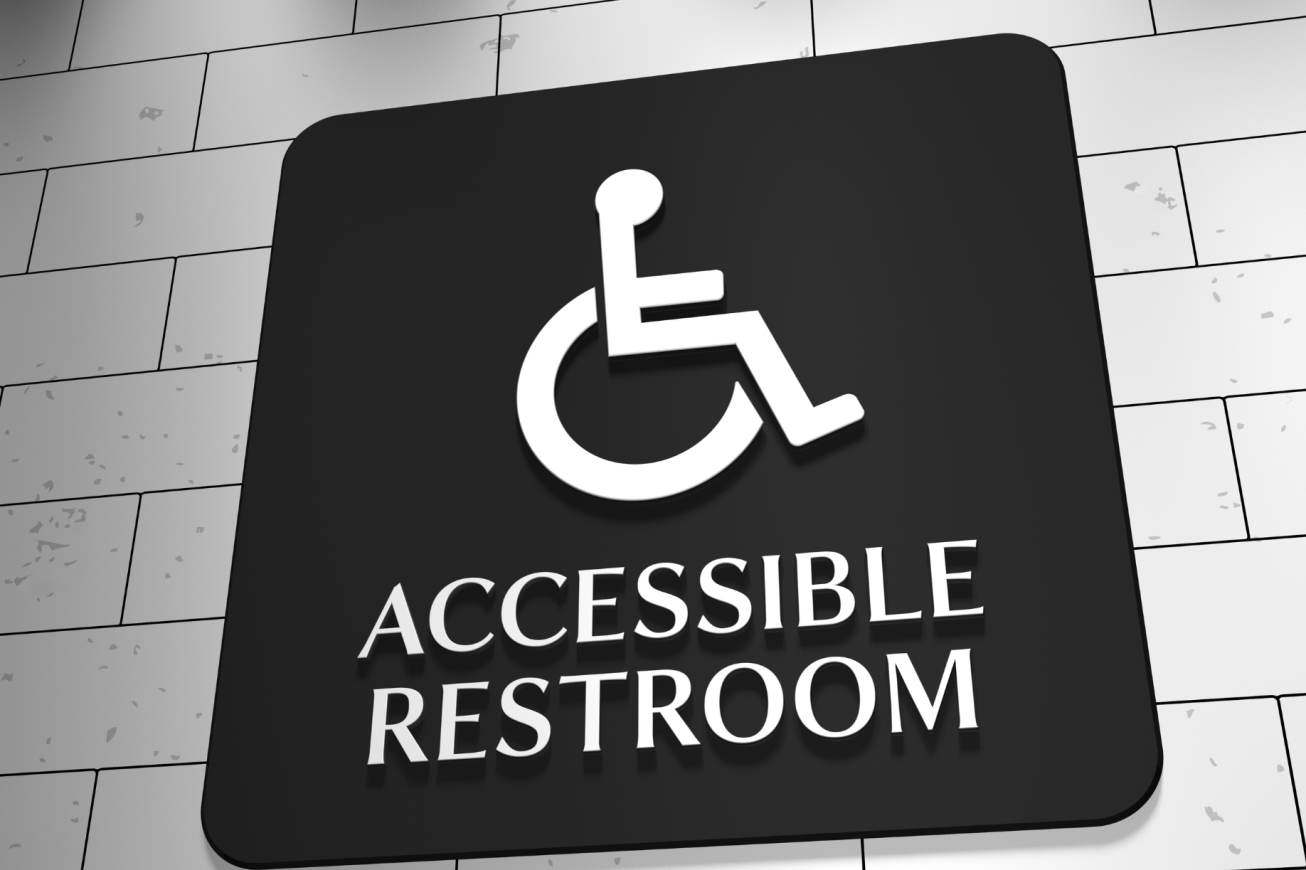
Creating spaces that serve everyone is a fundamental responsibility in modern architecture. When designing restrooms, strict adherence to accessibility standards ensures dignity and usability for all occupants. For architects, navigating the nuances of the 2010 ADA Standards for Accessible Design is not just about code compliance—it is about creating inclusive environments.
This guide consolidates critical requirements for accessible restroom design, focusing on the specific measurements and layouts necessary for new construction and renovations.
Earn 2 HSW/LU’s and dive deeper into Accessible Restroom Design with this online CE course.
General Requirements and Application
The foundation of accessible design lies in understanding when and where standards apply. For all new construction, you must follow the 2010 ADA Standards for Accessible Design, unless local administrative authorities enforce modified standards that offer greater accessibility.
Renovation projects require careful attention to scope. If you alter an area containing a “primary function”—a major activity for which the facility is intended—the restrooms serving that area must be made accessible. This trigger ensures that as buildings evolve, their essential amenities remain usable for everyone.
Within the restroom itself, provision is key. If you provide specific elements, at least one of each type must comply with accessibility standards. This applies to toilet compartments, water closets, urinals, lavatories, mirrors, and even coat hooks or shelves.
Establishing the Accessible Route
Accessibility begins before the user enters the room. The route to the restroom requires a clear path with a minimum width of 36 inches. However, architectural constraints often require adjustments. At a doorway, you can reduce this distance to 32 inches to accommodate the frame and stops.
Turns present unique challenges for wheelchair users. If the route necessitates a 180-degree turn around an element less than 48 inches wide, you must increase the clear width to 42 inches. You can avoid this increased width requirement if the route provides a width of at least 60 inches at the turn itself.
Doorway Specifications
The entrance is often the first barrier to accessibility. Restroom doors must provide a clear width of at least 32 inches. It is critical to measure this with the door open 90 degrees, accounting for the thickness of the door slab and the projection of the hardware. Additionally, the door requires specific maneuvering clearances as detailed in Table 404.2.4.1 of the standards.
Hardware selection significantly impacts usability. You must specify hardware that operates without tight grasping, pinching, or twisting of the wrist. Mount these controls between 34 and 48 inches above the finish floor.
Operational force is another key factor. Interior restroom doors cannot require more than 5 pounds of force to open. If you install a closer, you must program it to prevent the door from closing too quickly. The standard requires at least 5 seconds for the door to move from an open position to 12 degrees from the latch, giving users ample time to pass through safely.
Interior Layout and Turning Spaces
Once inside, the user requires sufficient space to maneuver. The standards mandate a circular turning space at least 60 inches in diameter or a T-shaped space (per Figure 304.3.2).
Door swings often complicate floor plan layouts. A door cannot swing into the required clear floor space of any fixture. However, the door is permitted to swing into the general turning space. Similarly, while the clear floor space for a water closet can overlap with the clear floor space of other fixtures or the turning space, it cannot overlap the physical fixtures themselves.
Water Closet Requirements
The water closet area requires precise dimensional planning. You must install the seat between 17 and 19 inches above the finish floor. Exceptions exist only for restrooms accessed through a single office or within residential dwelling units.
Clearances are strict. A single-user restroom or wheelchair-accessible stall requires a clearance of 60 inches wide by 56 inches deep around the water closet. If you specify a floor-mounted toilet in a wheelchair-accessible stall, you must increase the depth to 59 inches.
Grab bars provide essential support and must withstand 250 pounds of force. Unless specific exceptions apply (such as in private offices), you must provide bars on the rear and side walls. The rear grab bar must be at least 36 inches long, extending 12 inches from the centerline toward the side wall and 24 inches in the other direction. The side wall bar must be at least 42 inches long, located no more than 12 inches from the rear wall. Install all grab bars between 33 and 36 inches above the floor.
Conclusion
Designing accessible restrooms requires a balance of spatial awareness and technical precision. By mastering these dimensions—from the 32-inch door clearance to the exact placement of grab bars—architects ensure their designs are compliant, functional, and welcoming to all users.
Register for ‘Accessible Restroom Design’ to earn 2 LU/HSW units and learn even more on this topic.