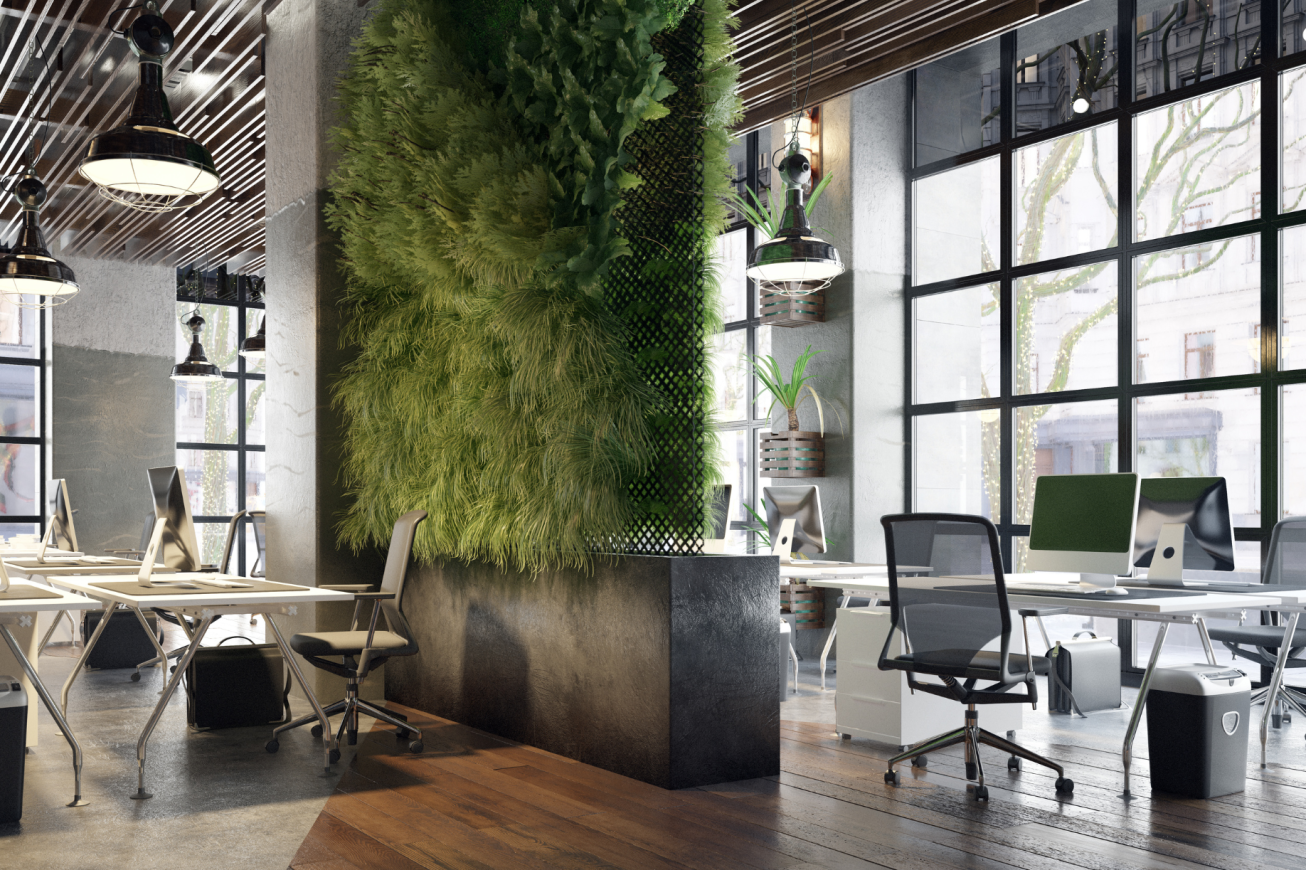
We spend up to 90% of our time indoors, much of it at work. While we focus on deadlines and meetings, the physical environment of our office is quietly influencing our health, mood, and even our cognitive abilities. The quality of the air we breathe, the light we see, and the sounds we hear can either drain our energy or boost our performance. By making strategic changes to the workspace, we can create an environment that actively supports well-being and productivity.
Earn 3 HSW/LU’s and dive deeper into designing productive workspaces with this online CE course.
Breathe Easier, Think Clearer
Indoor air can be up to two times more polluted than outdoor air. Pollutants like Volatile Organic Compounds (VOCs) from furniture and paint, particulate matter, and high levels of carbon dioxide (CO2) can cause headaches, fatigue, and congestion. This “sick building syndrome” directly impacts focus and increases sick days.
Research from Harvard University highlights a powerful solution: better ventilation. Doubling the amount of outside air from 20 cubic feet per minute (CFM) to 40 CFM per person was associated with significant increases in cognitive function. This simple change, equivalent to an 8% rise in employee performance, can be achieved by adjusting HVAC systems. Using an Energy Recovery Ventilation (ERV) system can even neutralize the extra energy costs, making it a sound investment in your team’s health and your company’s bottom line.
Practical Tips:
- Advocate for increasing outside air intake in your building’s ventilation system.
- Select low-VOC paints, furniture, and cleaning products.
- Use high-efficiency air filters (MERV 13 or higher) to capture small particles.
Let There Be (the Right) Light
Lighting has both visual and non-visual effects on our bodies. Poor lighting and glare from screens contribute to digital eye strain, which affects 65% of U.S. adults and can cause headaches and blurred vision. Beyond eye comfort, the type of light we’re exposed to regulates our internal body clock, or circadian rhythm.
Natural daylight is the gold standard. Office workers with windows report better sleep, more physical activity, and greater alertness. Sunlight contains blue-green wavelengths that suppress melatonin (the sleep hormone), helping us feel more awake during the day and sleep better at night. When daylight isn’t enough, technology can help. Blue-enriched LED lights that mimic the sun’s natural cycle—brighter and bluer in the morning, warmer and dimmer in the evening—have been shown to improve mood, concentration, and sleep quality.
Practical Tips:
- Position workstations parallel to windows to reduce glare.
- Use controllable blinds or light shelves to manage daylight.
- Incorporate lighting systems that provide at least 250 equivalent melanopic lux (a measure of light’s effect on our circadian rhythm).
Turn Down the Noise, Turn Up the Focus
Open-plan offices, now common in about 70% of U.S. workplaces, have made noise a major productivity killer. Constant background chatter and equipment sounds interfere with concentration and increase stress. One study found performance significantly decreased in its subjects at certain levels of background noise.
The solution lies in acoustic design. This involves absorbing sound, blocking it, and covering it up. Sound-absorbing materials on ceilings and walls can make a significant difference. A Noise Reduction Coefficient (NRC) of 0.9 for ceilings in open workspaces is a recommended target. For private offices and conference rooms, walls with a high Noise Insulation Class (NIC) rating can block sound transmission, ensuring conversations remain confidential and distractions are minimized.
Practical Tips:
- Use partitions with high NRC ratings in open-plan areas.
- Incorporate sound-absorbing panels on walls and ceilings.
- Ensure conference rooms have sealed doors and high-rated acoustic walls (NIC 53).
More Than Just a Pretty View
Bringing elements of nature into the workplace, a concept known as biophilic design, has profound benefits. Simply having a view of a natural landscape from a window can help employees recover faster from stress and mental fatigue. One study found that adding plants to an office increased productivity by 15%.
These natural elements trigger a positive physiological response, lowering blood pressure and stress levels. Even small touches, like potted plants on desks or a water feature in a common area, can enhance well-being and cognitive performance. A workplace that connects its occupants with nature is a workplace designed for human flourishing. By optimizing these physical factors, you can build an environment that not only looks good but actively works to make everyone healthier, happier, and more productive.
Register for ‘Designing Healthy and Productive Workspaces and Buildings’ to earn 3 LU/HSW unit and learn even more on this topic.