Description
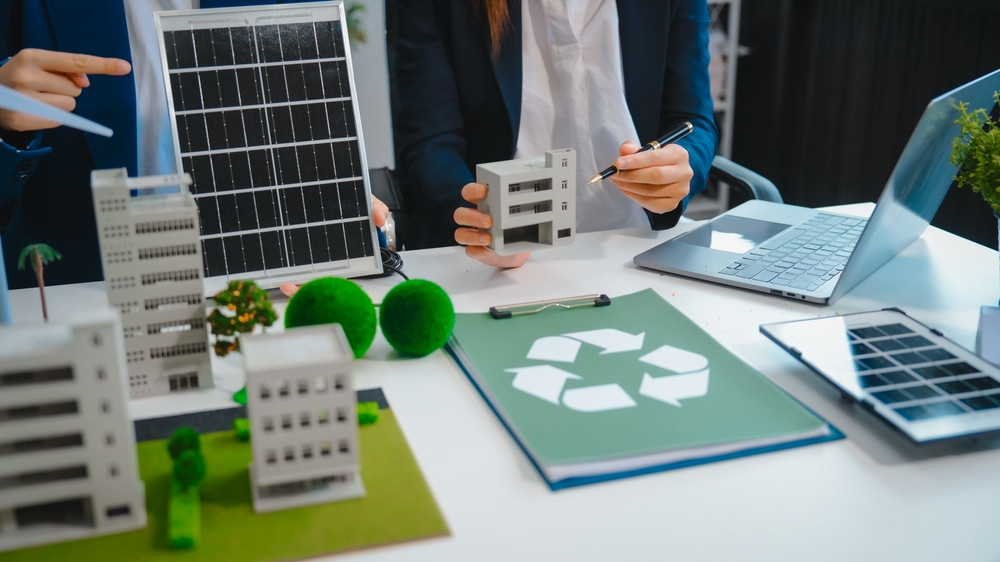
Sustainability is defined by one source as “the ability to be maintained at a certain rate or level.” It is described elsewhere as “meeting current needs, without compromising the ability of future generations to meet their needs, in the environment we will leave them.” To every extent possible, design choices made on projects should result in the least harm possible being done to our environment, to be inherited by our descendants. We will examine a few key principles of what can instead be called, ‘environmentally responsible’ design. Many steps that can be taken during design and after structures are complete, to reduce energy use and resources consumed. These include passive steps like building envelopes with thermally superior components. In the design phase, buildings can be positioned on site to strategically allow or preclude solar gain, admit or deny natural ventilation, and maximize or minimize shade needed in different seasons. The efficiency of building envelopes can be maximized. After passively minimizing energy use, active technologies can recapture energy or generate power for internal use or addition to the grid. Finally, investing in renewable energy enterprises allows investments in the environment beyond the confines of one site. Concepts examined here should provide a few more tools to design sustainably.
Learning Objectives
Gain an understanding of what is being referred to, when “sustainability” is being discussed.
Examine an overview of broad strategies used in designed sustainable buildings.
Recognize why buildings renovated for adaptive reuse are arguably the greenest buildings.
Understand the various design technologies used to generate power on site from renewable resources.
Demonstrate how LEED certification can be sought and obtained.
Hours: 1 LU/HSW
No reviews have been added for this product.


Description
Sustainability is defined by one source as “the ability to be maintained at a certain rate or level.” It is described elsewhere as “meeting current needs, without compromising the ability of future generations to meet their needs, in the environment we will leave them.” To every extent possible, design choices made on projects should result in the least harm possible being done to our environment, to be inherited by our descendants. We will examine a few key principles of what can instead be called, ‘environmentally responsible’ design. Many steps that can be taken during design and after structures are complete, to reduce energy use and resources consumed. These include passive steps like building envelopes with thermally superior components. In the design phase, buildings can be positioned on site to strategically allow or preclude solar gain, admit or deny natural ventilation, and maximize or minimize shade needed in different seasons. The efficiency of building envelopes can be maximized. After passively minimizing energy use, active technologies can recapture energy or generate power for internal use or addition to the grid. Finally, investing in renewable energy enterprises allows investments in the environment beyond the confines of one site. Concepts examined here should provide a few more tools to design sustainably.
Learning Objectives
Gain an understanding of what is being referred to, when “sustainability” is being discussed.
Examine an overview of broad strategies used in designed sustainable buildings.
Recognize why buildings renovated for adaptive reuse are arguably the greenest buildings.
Understand the various design technologies used to generate power on site from renewable resources.
Demonstrate how LEED certification can be sought and obtained.
Hours: 1 LU/HSW